Invited Speakers
 Huia Adkins
Chair, Circular Economy WA (CEWA), Australia
An experienced professional who co-creates circular strategy and action. She has worked extensively across sustainability, circular economy, waste and resource recovery as well as strategic planning, impact assessment and environmental regulation. Huia is the Chair of Circular Economy WA (CEWA), established to act as the circular economy hub for WA and has contributed to numerous other working groups and steering committees supporting the circular transition across Australia. She is passionate about driving systems change and having the hard conversations about the status quo.
Topic
Unlocking the barriers and enablers to mineral reprocessing.
 Richard Alorro
Associate Professor, Metallurgical Engineering, WA School of Mines, Curtin University, Australia
Associate Professor Richard Alorro is a distinguished research and teaching academic with over 17 years of experience spanning Metallurgical Engineering, Resources, and Geo-Environmental Engineering. He is a core member of the Critical Minerals, Metals and Materials for Energy Transition (C3MET) research group at Curtin University and served as the Director of Global Initiatives at the Western Australian School of Mines (WASM) from 2023-2025. In this leadership role, he played a pivotal part in shaping the school’s international strategy, forging global partnerships, and advancing collaborative academic and industry programs.
Assoc Prof Alorro’s research is centered on sustainable resource processing and environmental stewardship. His expertise includes leaching and separation technologies, technospheric mining, resource recycling, critical and strategic metals processing, waste treatment, and environmental remediation. He actively leads and supervises a team of Early Career Researchers (ECRs) and Higher Degree by Research (HDR) students, managing multidisciplinary projects funded by industry partners, government bodies, and international research institutions. His scholarly contributions are extensive, with numerous publications in high-impact international journals, presentations at major global conferences, and a granted patent.
Topic
Technospheric Mining for the Circular Economy: Recovering Critical Resources from Wastes and Anthropogenic Ores.
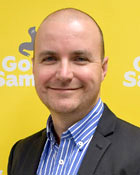 Kane Blackman
Chief Executive Officer, Good Sammy Enterprises, Australia
Kane leads Good Sammy, an iconic Western Australian for-purpose organisation that employs 850 people within social enterprises in Retail, Recycling, Logistics, E-Commerce and Property Care. Good Sammy creates employment opportunities for people with disability, and over 50% of its workforce have a disability.
His previous senior executive roles have been in private and Government businesses within the financial services and resource sectors.
Kane’s passion is working in commercial environments to drive social outcomes, which is informed by his experience as a father of a child with a rare disease.
Kane is an inaugural Member of the WA Government’s Future Health Research and Innovation Advisory Council, and Board Member of East Metropolitan Health Service.
Kane’s prior Board Roles include: Chair of the Ministerial Advisory Council on Disability, Director of Therapy Focus, Charitable Recycling Australia, Rare Voices Australia and President of the Leederville Sporting Club. Kane has also been a Panel Member of the recent WA Government reviews of the School Education Act and Post Secondary School Pathways.
Topic
Social Enterprise and the Circular Economy — the Good Sammy Model to deliver environmental, social and economic impact.
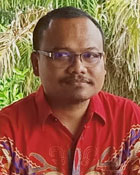 Achmad Room Fitrianto
Senior Lecturer & Researcher at Islamic Economy and Business Faculty, The State Islamic University of Sunan Ampel Surabaya, Indonesia
Achmad Room is a lecturer at the Faculty of Islamic Economics and Business, UIN Sunan Ampel Surabaya, and he served as Vice Dean for Student Affairs and Networking 2022-2026. He holds degrees from Universitas Airlangga, IAIN Sunan Ampel, Murdoch University, and a PhD in Economic Geography from Curtin University. His research focuses on development economics, community empowerment, sustainability, and Islamic economics.
Topic
Sustainable Lifestyles Through Sharia Waste Banks: A Student-Led Community Movement in East Java.
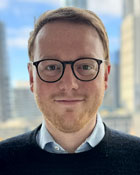 Martin Geissdoerfer
Associate Professor and Co-director Sustainability Transitions Lab, Monash University, Australia
Martin Geissdoerfer is Associate Professor of Circular Economy Transitions at the Monash Business School and Co-director of its new Sustainability Transitions Lab, building a leading circular economy research centre in the region. He is also an Associate at University of Cambridge’s Circular Economy Centre. Martin has authored some of the most influential scholarly publications on the circular economy and is among the most highly cited sustainability scientists globally. His research focuses on circular economy transitions, business model innovation and sustainability strategies, with his work widely adopted in academia, policy and management practice. He previously advised global Fortune 500 companies and policymakers on circular economy and sustainability strategy, business building and how to employ policy labs to improve outcomes, at McKinsey & Company.
Topic
Accelerating circular transitions: An integrative perspective.
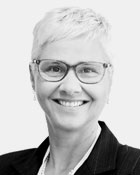 Rean Gilbert
General Manager, CODA, Australia
Rean is the General Manager of CODA, bringing decades of experience across offshore decommissioning, regulatory approvals, and environmental stewardship spanning industry, consulting, and government.
With a strong academic foundation in marine science, she is recognised for strategic leadership, stakeholder engagement, and delivering credible, future-focused outcomes. Rean works closely with operators, regulators, and researchers to strengthen Australia’s decommissioning capability and support safe, sustainable outcomes.
Topic
When infrastructure retires — what offshore decommissioning teaches us about circularity, regulation and responsible end of life planning.
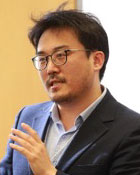 Jungshin Kang
Associate Professor in the Department of Energy Resources Engineering at Seoul National University, Korea
Jungshin Kang is an Associate Professor in the Department of Energy Resources Engineering at Seoul National University. He also serves as Program Director of the Integrated Major in Resource Recovery–Circular Economy of Energy Storage Systems and Director of the Research Center for Resource Circulation. Prior to joining Seoul National University, he worked as an engineer at POSCO and as a Principal Researcher at the Korea Institute of Geoscience and Mineral Resources.
His research interests span sustainable extractive metallurgy, resource recycling, and critical minerals and materials. His work focuses on developing environmentally-sound and resource-efficient technologies for the production, recovery, and recycling of critical metals and materials for energy and industrial applications. Through collaborative projects with industry, government, and international research institutions, he seeks to develop resource-recovery processes that combine scientific understanding with environmental and industrial applicability.
Topic
Sustainable Metallurgical Processes for Critical Metals: From Resource Recovery to High-Value Material Production.
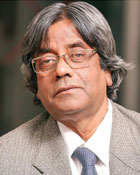 Mubarak Ahmad Khan
Chief Scientist, Echocells Research Laboratory, Echotex Limited, Bangladesh
Dr Mubarak Ahmad Khan Chem, former Scientific Advisor at the BJMC, Ministry of Textiles and Jute and Director General, Bangladesh Atomic Energy Commission. His research focuses on sustainable technologies in nanotechnology, materials science, composite materials, biodegradable polymers and biomedical science to address environmental and health issues. He has held prestigious fellowships globally, including AvH, DAAD, JSPS, MIF, BAS, FRSC and IAEA. As a visiting scientist at Michigan State University, USA. A part-time professor, visiting professor at various Universities. He has over 700 publications, 21 book chapters and 8 patents, with 17040 citations on Google Scholar (July 02, 2026). He has supervised more than 300 M.Sc., 8 M.Phil. and 22 Ph.D. students. Notable innovations include the Sonali Bag®, Jutin®, Flushable sanitary napkin®, advanced wound dressing, liquid bio-fertiliser, natural plant growth promoter, and advanced textile materials. He has received multiple national and international awards, including the Independence Award (The Highest Civilian award), the National Jute Award, the National Environment Gold Medal Award, the MIT Solve Challenge, the OBADA Prize (USA), and the ICNF Award (Portugal). He is the number one scientist in the Jute sector worldwide, based on Scopus-indexed international publications.
Topic
Sonali Bag®: A Cellulose-Based Zero-Trace Biopolymer as a Sustainable Alternative to Single-Use Plastics.
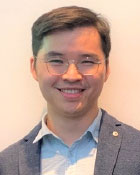 Huan Li
Curtin University’s Western Australian School of Mines, Australia
Dr Huan Li is an ARC Discovery Early Career Researcher Award (DECRA) Fellow at Curtin University’s Western Australian School of Mines. He obtained his PhD in Metallurgical Engineering from Curtin University in 2021, followed by three years of postdoctoral research in Australia and two years as a Professor in China.
Huan’s research focuses on sustainable extractive metallurgy and circular economy solutions for base and precious metals. His work aims to develop environmentally benign, energy-efficient, and economically viable technologies for the extraction, separation, and recovery of valuable metals from both primary mineral resources and end-of-life products.
His expertise spans e-waste recycling, solar photovoltaic panel recycling, lithium-ion battery recycling, lithium extraction from hard-rock resources, recovery of gold and copper from ores and tailings, and the processing of nickel and cobalt from sulfide resources.
Topic
Sustainable hydrometallurgy for metals recovery from end-of-life renewable energy equipment.
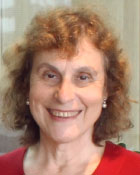 Dora Marinova
Curtin University Sustainability Policy Institute, Australia
Dr Dora Marinova is Professor of Sustainability at the Curtin University Sustainability Policy (CUSP) Institute, Australia which she established in 2007 and where she was Director between 2015 and 2018 and Deputy Director between 2007 and 2015. Her areas of research interest cover sustainability, innovation and sustainometrics. Dora has more than 400 refereed publications and has supervised 85 PhD students to successful completion. Her books Food in a Planetary Emergency (published in 2022) and Gen Z and the Future of Food (published in 2026) received “Best in the World” in the prestigious 28th and 31st Gourmand Awards. Ten of her papers are rated by Altmetric in the top 5% in the world for the social media attention they have received. Since 2013, Dora has served regularly as a member of different peer review panels of Australia’s National Health and Medical Research Council (NHMRC). She is an Elected Member of the Australian Institute of Aboriginal and Torres Strait Islander Studies (AIATSIS) and Elected Fellow of the Modelling and Simulation Society of Australia and New Zealand (MSSANZ). For the period 1975–2023, Scopus lists her as Australia’s top author and 21st in the world in the area of sustainability. According to ScholarGPS, Dora is in the top 0.5% scholars worldwide for 2024.
Topic
Circularity in Australia’s food-related government policies.
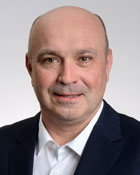 Jan Nečas
Professor at the VSB — Technical University of Ostrava, Czech Republic
Professor Jan Nečas is a leading expert in particulate solids, specializing in their behavior, mechanical properties, and industrial applications. For more than two decades, he has been a driving force in research and innovation in this field and currently heads the Centre for Bulk Solids, Faculty of Mining and Geology, VSB-TUO.
His research encompasses design and process engineering, with a particular focus on bulk solids handling, storage systems, applications in the energy sector, failure analysis and troubleshooting of conveying and storage equipment, and the sustainable processing of secondary raw materials.
Professor Nečas has served as principal investigator or researcher in numerous national and international research projects, many of them interdisciplinary and delivering outcomes with significant practical and industrial impact. He also conducts contract research for major international companies. Currently, he serves as the lead researcher for the CIRKARENA project, overseeing the research area “Monitoring and Recycling of Industrial Production Waste Heaps and Landfills.”
His scientific achievements include numerous peer-reviewed publications, patents, and licensed technologies that have been successfully implemented in industry. As part of his academic career, he worked at the University of Greenwich (UK) and collaborates with leading research institutions in the field of particulate solids worldwide.
He is an elected member of the European Federation of Chemical Engineering (EFCE) Working Party on Mechanics of Particulate Solids.
Topic
Coal Combustion By-Products in the Czech Republic: Opportunities and Challenges.
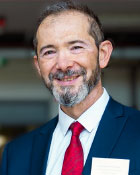 Aleksandar Nikoloski
Professor of the Extractive Metallurgy Hub, Murdoch University, Australia
Professor Nikoloski is a leading research scientist and Head of the Extractive Metallurgy Hub at Murdoch University, as well as Research Program Lead for the Critical Metals for Critical Industries (CMCI) CRC in Australia. The Extractive Metallurgy Hub plays a pivotal role in advancing low-carbon and sustainable metals production in Western Australia, while the CMCI CRC brings together industry, academia, and government to develop and commercialise innovative onshore refining technologies for critical minerals. Professor Nikoloski is widely recognised for his expertise in applied electrochemistry and hydrometallurgy. He holds a PhD in Metallurgical Engineering and has over three decades of experience in teaching and research, including receiving the 2023 Vice-Chancellor’s Distinguished Research Award for sustained excellence. His work has led to the development of novel processing technologies for lithium, vanadium, uranium, rare earth elements, and base metals, combining fundamental research with practical industrial applications, particularly in energy storage and sustainable processing. He has published more than 120 peer-reviewed papers, secured several patents, and contributed extensively to industry and government reports. Through his internationally recognised research group, Professor Nikoloski has helped position Murdoch University at the forefront of hydrometallurgical innovation in Australia. His strong industry collaborations continue to drive advances in resource recovery and recycling, reinforcing his leadership in sustainable process development within the minerals sector.
Topic
Powering a Circular Future: Lithium, Battery Recycling, and the Metals of Sustainable Living.
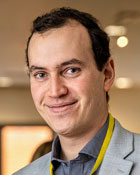 Henrique Pacini
Program Lead, SMEP Project, UN Trade and Development, Switzerland
Henrique Pacini is an economist and Board Member of the UK-funded Sustainable Manufacturing and Environmental Pollution Programme. He is based at UNCTAD in Geneva. He provides strategic and technical leadership on trade, circular economy, pollution prevention, and sustainable manufacturing, with a focus on developing countries. He has supported SMEP’s GBP 25 million UK Aid-funded programme addressing pollution in manufacturing sectors across Africa and Asia. Henrique holds degrees from the University of São Paulo, Hochschule Bremen, and KTH Royal Institute of Technology, and completed post-doctoral research at Harvard University on global plastic scrap trade networks.
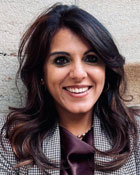 Anita Prabhakar-Fox
Honorary Professor, University of Queensland, Australia
Anita is a globally recognised leader in mine waste characterisation and geometallurgy with a strong focus on tailings. Currently, she is the Technical and Innovation Lead at KCB and an Honorary Professor at the University of Queensland’s Sustainable Minerals Institute. Anita holds an MSci (Hons) in Environmental Geology from Imperial College London and a PhD in Environmental Geochemistry from CODES, University of Tasmania. In 2021, she founded UQ’s MIWATCH group, advancing mine-waste characterisation to improve planning, management, and remediation, and served as Deputy Director of the ARC “Critical Resources for the Future” ITTC. Her last role was at BHP in the Resource Centre of Excellence as the Principal Global Characterisation. Her research includes mine waste chraracterisation across the life-of-mine and recovery of critical metals from waste, with numerous publications in leading journals. A 2023 “Superstar of STEM” and WIM100 2024 honoree, Anita is a passionate STEM advocate committed to sustainable mining and mentoring future leaders.
Topic
Opportunities for circularity in the mining industry — a mine waste perspective.
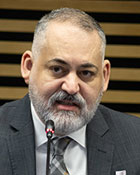 Alessandro Sanches-Pereira
Executive Director, Instituto 17 (i17), Brazil
Dr Alessandro Sanches-Pereira is the Executive Director of Instituto 17 (i17) in Brazil, Adjunct Senior Lecturer and Researcher at the Curtin University Sustainability Policy Institute (CUSP), and a member of the UN Secretary-General's Council of Engineers for the Energy Transition (CEET). He served as Lead Author of Chapter 5 — Demand, Services and Social Aspects of Mitigation — of the IPCC Sixth Assessment Report, Working Group III.
His research and implementation work spans energy transition, circular economy, waste-to-energy and climate policy across Brazil, Sweden, Australia and the wider Global South. He holds a Master's in Environmental Policy and Management, a PhD in Engineering from UNICAMP, and postdoctoral training in Energy Planning. His work focuses on how decarbonisation pathways must be designed differently when development, equity and energy access are treated as central — not peripheral — concerns.
Topic
Assessing the Carbon Intensity of Biomethane under Brazil’s RenovaBio Policy Framework.
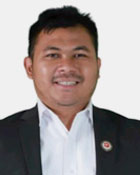 Nugroho Adi Sasongko
Director, Research Centre for Sustainable Industrial and Manufacturing Systems, Indonesia
Nugroho Adi Sasongko is Director of the Research Center for Sustainable Industrial and Manufacturing Systems (PRSIMB) at Indonesia's National Research and Innovation Agency (BRIN), a Senior Research Fellow at Murdoch University, and a Visiting Researcher at the UWA Business School. His research spans life cycle assessment, circular economy, waste-to-energy, and techno-economic valuation of industrial downstreaming. He leads Indonesia's national Life Cycle Inventory (LCI) database initiative and Indonesia–Australia collaborative research on critical minerals recovery from bauxite residue and low-carbon geopolymer materials. He holds a Ph.D. in process engineering (University of Tsukuba and Murdoch University) and an M.Sc. from the University of Stavanger, Norway.
Topic
From Bauxite Residue to Refined Resource: Circular Valorisation of Red Mud for Critical Minerals and Low-Carbon Geopolymers in Indonesia and Australia.
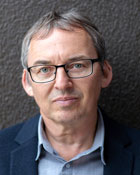 Heinz Schandl
Adjunct Professor and Senior Principal Research Scientist, Commonwealth Scientific and Industrial Research Organisation (CSIRO), Australia
Prof Heinz Schandl holds a PhD in Sociology and an MA in Social and Economic Sciences. As a senior science leader at the Commonwealth Scientific and Industrial Research Organisation (CSIRO) in Canberra, he serves as the director of CSIRO’s Circular Economy Initiative. In this capacity, he coordinates research endeavours on the circular economy. Beyond his primary role at CSIRO, he is an adjunct professor at the Graduate School of Environmental Studies at Nagoya University in Japan. His affiliations extend to global platforms: he is a member of the United Nations Environment Program (UNEP) International Resource Panel, an expert member of the UNCRD Regional 3R and Circular Economy Forum for Asia and the Pacific, and a past president of the International Society of Industrial Ecology. At the core of his research are themes like social theory, industrial metabolism, and environmental and sustainability policy. This expertise underpins his commitment to promoting evidence-based policies focused on resource efficiency, waste minimisation, greenhouse gas abatement, and the principles of the circular economy.
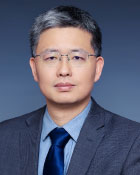 Jiuchang Wei
Professor at the School of Public Policy and Management, Tsinghua University, China
Dr Jiuchang Wei is a Tenured Professor, Xinghua Chair Professor and PhD Supervisor at the School of Public Policy and Management, Tsinghua University. He received his BSc and PhD degrees from the University of Science and Technology of China (USTC).
His research interests span risk analysis and governance, organizational strategic management, and sustainable development, among others. He has led more than 10 national-level basic research projects, including the National Science Fund for Distinguished Young Scholars, a key project of the National Natural Science Foundation of China (NSFC), the National Science Fund for Excellent Young Scholars, general and youth programs of the NSFC, and youth projects of the National Social Science Fund of China (NSSFC). He has authored over 100 academic papers published in prominent domestic and international journals such as Strategic Management Journal, Psychology & Marketing, Risk Analysis, and Journal of the American Society for Information Science and Technology.
His academic achievements have been recognized with numerous awards, including the First Prize of the Natural Science Award and the Second Prize of the Excellent Research Achievement Award (Humanities and Social Sciences), both conferred by the Ministry of Education as part of the Outstanding Scientific Research Achievements in Higher Education.
Topic
Policy Analysis on Recycling and Comprehensive Utilization of Spent Power Batteries from New Energy Vehicles in China.
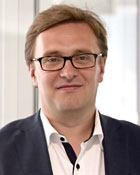 Henning Wilts
Professor and Head of the Division on Circular Economy, Wuppertal Institute for Climate, Environment and Energy, Germany
Prof. Dr. Henning Wilts heads the Division on Circular Economy at the Wuppertal Institute for Climate, Environment and Energy. His research focuses on transformation processes towards a circular economy: How can linear processes be transformed into circular value creation as quickly as possible? Why haven't we already become a circular economy, and how can policymakers overcome key obstacles? To this end, he coordinates various research projects in the areas of recycling, circular plastics, packaging waste prevention and zero waste strategies, currently also the scientific background study for the national Circular Economy strategy in Germany. Since 2023 he holds the professorship for Circular Society at FernUniversität in Hagen.
Topic
Policy mixes for a circular economy: Insights from the CE strategy development process in Germany.
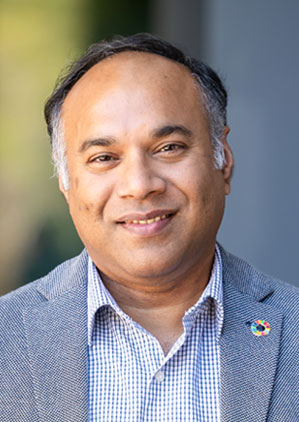 Atiq Zaman
Co-Director of the Global South Nexus and Associate Professor, Curtin University, Australia
Dr Atiq Zaman is an internationally renowned expert in zero waste and the circular economy. He is also a member of the UN Council of Engineers for Energy Transition, a high-level advisory body of 50 global engineers established to support the UN Secretary-General’s global decarbonisation goals.
With more than 90 scholarly publications and over 6,000 citations, Dr Zaman was ranked number one globally in zero waste by ScholarGPS and recognised among the top 2% of global scientists by Stanford University and Elsevier. He is actively involved in circular economy and zero waste research and engagement at various levels and contributes to national and global sustainability policy discussions, including global climate conferences, plastic treaty negotiations and the Global Zero Waste Forum. He is the recipient of Western Australia’s 2025 Tall Poppy Science Award.
Topic
Circular Economy Practices in the Built Environment in Australia.
 Adrienna Zsakay
CEO & Founder Circular Economy Asia, Australia
Circular Economy Asia (CEA) was founded by Ms Adrienna Zsakay in 2016. Her journey began when she became interested in infrastructure design for recyclable resource recovery collection systems. From there, it was an easy transition to the circular economy and the founding of CEA in Australia. In early 2020 Ms Zsakay launched Circular Skills, an online education platform dedicated to skills development for the circular economy. CEA’s other activities include the development of a secondary raw materials industry and circular and sustainable supply chains.
Ms Zsakay has lived in several different countries across the Asian region and has a BA(Asian Studies & Politics) from the University of Western Australia and studied International and Asian food law at Michigan State University. She also completed an online course on Systems Engineering from the University of NSW in Australia and Life-Cycle Assessment training from One-Click LCA.
Topic
Establishing a secondary raw materials industry — what does it take?
Peter Damen — GDA, Level5design